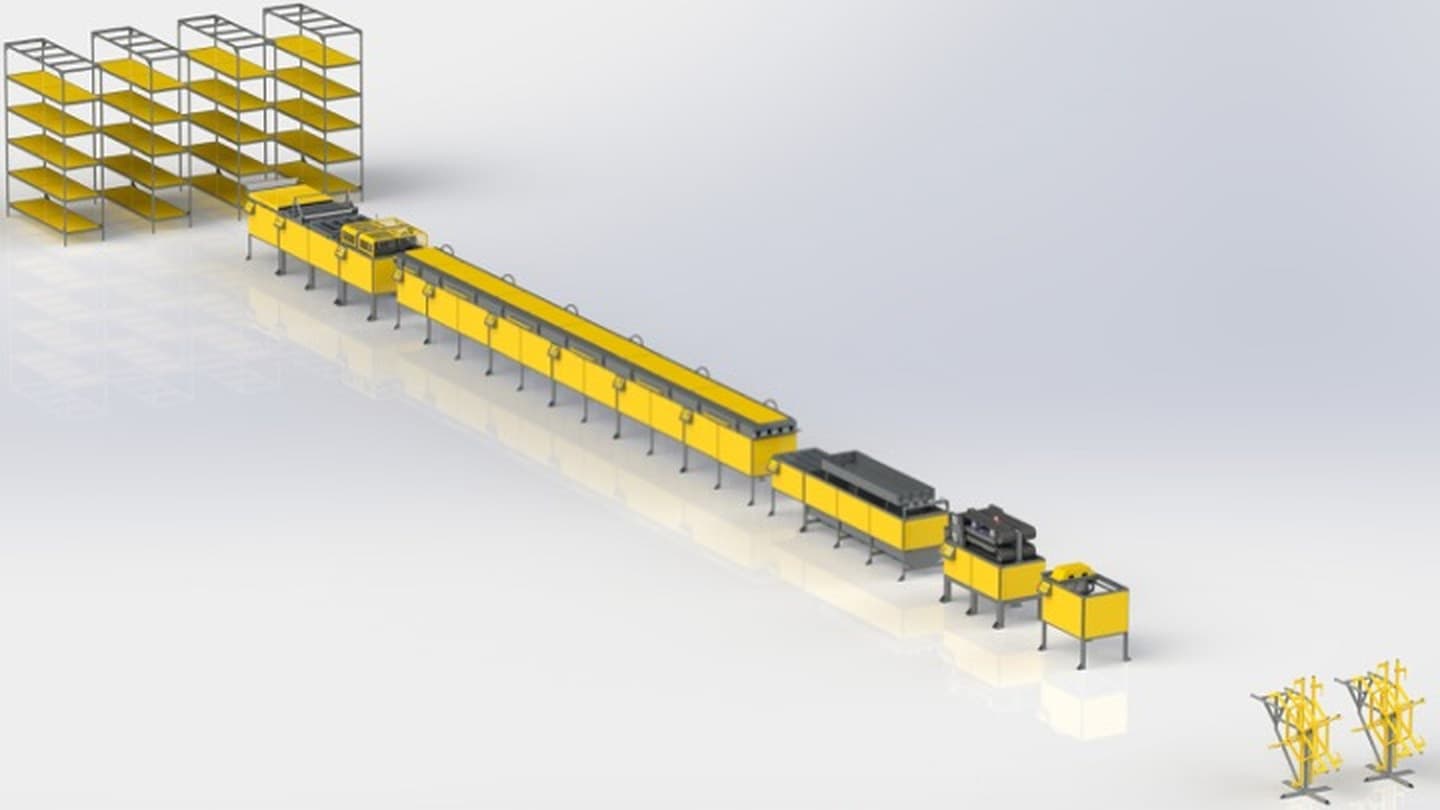
A production line looks like one machine but it is really eight stations in a row, and each one can spoil what the previous one did. That is why a four-hour run tells you more about a machine than any specification sheet.
The creel
Glass roving feeds from creels at the back of the line. How many ends you pull sets the diameter. How evenly they feed decides whether the bar has a consistent cross section, and inconsistent section is what turns into rejected batches later.
Impregnation
The fibre passes through resin. On a controlled line this happens in stages rather than one bath, because dry fibre left inside a bar is a void, and voids are where alkali attack starts once the bar is in concrete.
The die
Heated, and the temperature has to hold. Ask to watch the controller readout during a run rather than reading the brochure — a heater that fades above 250 °C undercures the bar, and undercured bar fails on the tensile bench.
Pulling
A caterpillar puller grips along a length. A roller puller grips at points and slips. That difference shows up as elastic modulus, and modulus is what a structural engineer designs against — which is why it quietly decides which projects will accept your bar.